(Okay, let's get this show on the road!
Don't ask what Okarito means, i haven't a clue &, apparently, neither does anyone else)
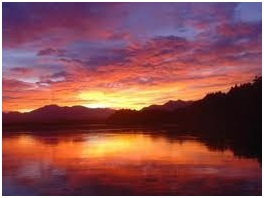
Deep in the wilds of New Zealand's South Island West Coast, about 130 kilometers south of Hokitika, 13 km off the main highway and on the edge of the sea, there is a tiny 'town' at the southern end of a large lagoon.
The Okarito Lagoon, by the Tasman Sea at the mouth of the Okarito River, is New Zealand's largest unmodified wetland and is home to many species of native birds including the rare and beautiful Kotuku, or White Heron.
Maori have known, visited and hunted in the area for many, many years - probably since about 600AD. The first European visitor was Thomas Brunner who passed through, walking along the beaches, during his epic journey of exploraion in 1847. Gold was discovered there in1865 and a town of about 1500 people sprang up almost overnight. An additional 2500 people were at the 3 Mile and 5 Mile mining sites.
The main street of this classic 'Wild West' town was lined with over 30 stores and hotels, a court house, gaol, blacksmith's shop, carenter, undertaker, school and the harbourmaster of the West Coast's 3rd largest port. The buildings were all on the east, inland, side of the street; the wild beachfront was on the west.
For over a decade there were regular services sailing directly to Australia. In the absence of any roads, the fastest way to travel to the Capital, in Wellington, was to catch a boat over to Melbourne and back.
The goldrush declined rapidly and so did the population. By the 1880's there were only 12 families and 2 hotels left. The school closed in 1946 and so did the port at about the same time. The instant birth and rapid decline of the town was an all too common theme in the boom and bust years of the West Coast gold rushes. Stafford, Goldsborough, Charleston, Lyell, Ross and many others, once sizable towns vanished into history when their people moved on to the next El Dorado.
Some towns survived and the people stayed, finding employment in other, newer, industries like coal mining and saw milling etc. Most of the towns of today were founded in the heady years of the 1860's and 70's when the area's population boomed.
Okarito was not one of the success stories. It hasn't quite died and is now home to about 30 permanent residents and a floating population of visitors and holidaymakers. But - what if? What if history had taken a slightly different course and Okarito survived and continued to struggle on into the 21st century?
Life could've been different there.